|
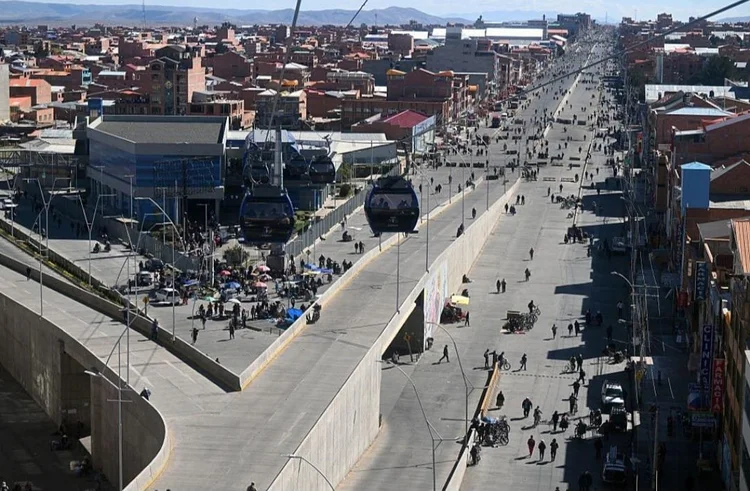
Dear Friends, Bolivia’s conflict is not easy to describe; deep divisions exist among Bolivians themselves. What follows is what we have learned through online news sources and firsthand accounts from our partners on the ground. Today at 3am the Bolivian Government declared a State of Emergency, clearing the way for armed forces to end protests and dismantle road blocks. Since early May, miners, teachers, farmers, and indigenous workers have taken to the streets across Bolivia with over 100 roadblocks, effectively cutting off La Paz, Bolivia's political capital. What started as a protest against a law that threatened indigenous and rural communities' land rights quickly grew into a nationwide uprising with 10 deaths, 37 injuries, and 365 arrests. People are protesting the elimination of fuel subsidies, soaring costs, and cuts to wages and social programs, with the demand for President Rodrigo Paz’s resignation. Cities are running short of food and medicine due to roadblocks. Making matters worse, the government imported low-grade gasoline that damaged thousands of vehicles, sparking further protests by transportation unions. Why is this happening now? The nationalization of hydrocarbons, in 2006, combined with heavy taxes and tariffs, discouraged foreign investors, causing a dramatic decline in energy production. Bolivia’s collapse of gas exports, led to a shortage of U.S. dollars, creating a chokepoint for international trade, leading to inflation and a steep rise in fuel prices. This has had a devastating impact on the country’s informal economy, which represents nearly 70% of the economy, and is primarily indigenous. For nearly two decades, (2006 - 2025) Evo Morales and Luis Arce Catacora, presidents under the MAS party, however imperfect, gave Indigenous people real political power and an alternative to the dominant economic system. Now, 50 days into a near-total shutdown of La Paz, the Bolivian people are, perhaps, the most powerful example of resistance today. Bolivia’s security forces have responded with tear gas, and rubber bullets, and hundreds of protesters have been arrested, including labor and indigenous leaders charged with terrorism. The government has threatened to suspend constitutional rights, and has authorized military deployment. Pro-government paramilitary groups have been attacking protesters with impunity. President Paz has the full support of the U.S. government and the “Shield of the Americas”, a Trump-backed regional alliance of 13 countries, has issued a joint statement condemning the protests, calling them an attempt to "overthrow" the Paz government. President Trump described the unrest as a coup, claiming the protests were funded by "narco-terrorists," a reference to former president Evo Morales. However, analysts and observers on the ground say the focus on Morales is misleading — the sectors involved in the protests are not directly affiliated with him. Most describe the movement as a broad, grassroots uprising driven by Indigenous groups, workers, and social movements pushing back on the new, right-wing government policies which have left them with untenable inflation and no political representation. In recent updates from our partners in Bolivia, we learned that a delegation of Human Rights observers were refused entry at the El Alto airport. We also learned that the peasant farmer group Tupak Katari and the Central Obrera Boliviana (COB), Bolivia's largest trade union federation, have met with government officials but are refusing to continue dialogue until the detained community leaders are released. Read More: 2026 Bolivian Protests — Wikipedia Workers, Students, and Indigenous Movements Shut Down Bolivia — Truthout US Defense Secretary Compares Bolivia Protests to Government Overthrow — Al Jazeera Shield of the Americas Joint Statement — U.S. Embassy in Bolivia US and Shield of the Americas Condemn Efforts to Overthrow Paz — Fox News Bolivia: Indigenous-Led Anti-Austerity Protests — Democracy Now (starts at minute 50)
|